Fences fail slowly and then suddenly. A post that has been leaning for a year goes over in the first hard wind, and a gate that scrapes stops latching. This page is a diagnostic guide: what the common failures look like, what usually causes them in a sunny, windy, dry climate, and how to decide between a fix and a replacement.
Common problems and what they usually mean
A leaning or wobbling post
The post is the foundation, so a lean is a foundation problem. Causes include a post set too shallow or without enough concrete, a rotted base on a wood post, or soil that has washed out from irrigation or runoff. If one post leans and the rest are firm, resetting or replacing that post is the usual repair. If posts lean along much of the run, the original installation is the problem and replacement deserves a real look.
Wind damage
Solid privacy panels catch wind like sails. Wind damage tends to show up as panels blown out of their rails, posts snapped or pushed over, and gates ripped off their hinges. Document damage with dated photos before cleanup, and if you plan to file a claim, call your insurer before you repair. A repair that reuses the same weak post spacing may fail again in the next storm, so ask the repair company whether posts need to be closer, deeper, or better set.
Rotted, warped, or split boards on a wood fence
Boards fail first at the ground and at the top edge. Individual boards are cheap to replace. When rot has reached the rails or posts, the cost climbs because the structure has to be repaired, not just the surface. Sealing or staining on a schedule slows this considerably, so a repair is also the moment to ask about a maintenance plan.
Sun-damaged vinyl
Vinyl in strong sun can fade, chalk, or become brittle over time, depending on the formulation. Cracked panels or rails are usually replaced as sections rather than patched. If your fence is under a manufacturer warranty, read what it says about fading and cracking before you pay for a repair.
Sagging or sticking gates
A gate that drags or will not latch is usually a hardware, post, or frame issue rather than a "bad gate." Tightening or replacing hinges, resetting the gate post, or adding a diagonal brace or tension cable often solves it. Gate repairs typically cost $50–$400.
Chain-link and ornamental iron
Chain-link sags where posts lean or the tension wire loosens, and gets bent where it was hit. Ornamental iron fails at welds and at the finish: rust starts where the coating is chipped, and a repair usually means welding and recoating. Ask whether a repair includes rust treatment and repainting so the fix does not rust through again.
Cracked or leaning block walls
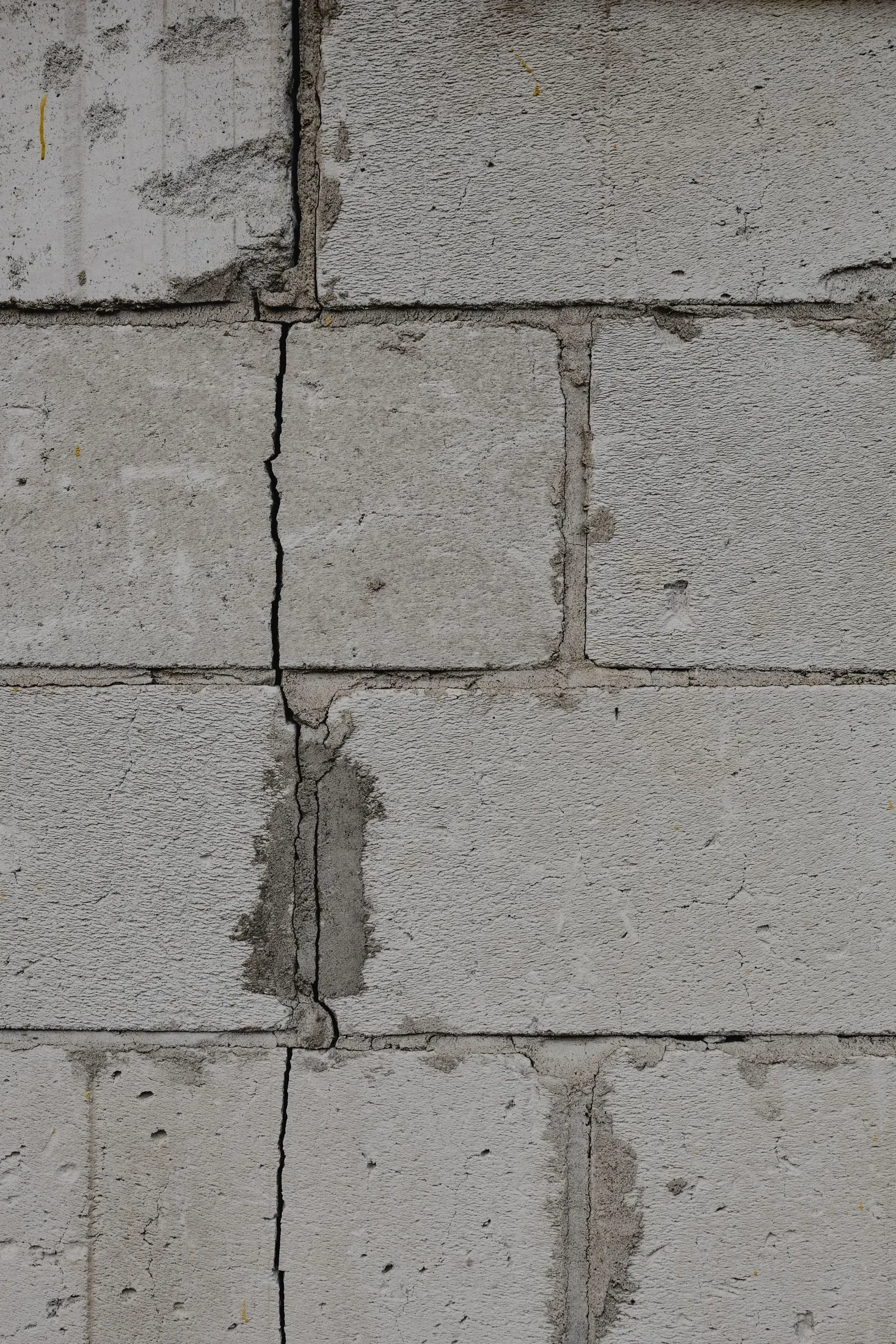
Hairline cracks in mortar joints are common and often cosmetic. A crack that widens, runs stair-step through the joints, or shows offset between courses suggests movement. A wall that leans or bows, and especially a retaining wall, should be assessed by a qualified professional because a failure can be unsafe. A retaining wall of 4 feet or more, or any wall in a front setback, involves St. George City Code §10-18-5, so a rebuild may need a permit.
Repair or replace?
A useful way to decide is to ask three questions:
- How much of the fence is affected? A few boards, one gate, or one or two posts point to repair. Widespread rot, lean, or panel failure points to replacement.
- Why did it fail? If the cause was one event, such as a car strike or a fallen limb, repair is often sensible. If the cause was age or installation, more failures are coming.
- What do the two quotes say? Ask for a repair quote and a replacement quote on the same scope. When repair gets close to the price of new, replacement usually wins.
What repairs cost
These are national ranges published in early 2026, not local quotes. The cost guide lists sources and method.
| Type | Typical installed range (per repair) | What to know |
|---|---|---|
| Minor repair | $100–$300 | Loose boards, latches, small patches. |
| Standard repair | $300–$900 | A panel or post; the most common range. |
| Major repair | $900–$2,500 | Multiple sections or structural work. |
| Replace one damaged post | $250–$600 | Concrete-set posts cost more to reset. |
| Gate repair | $50–$400 |
Labor for repair work is commonly quoted at $50–$100 per hour; welding and specialty work runs higher.
Stopping the next failure
A repair that ignores the cause is a repair you will pay for twice. Before you approve the work, ask the company what caused the failure and what they are changing so it does not repeat. The answers that usually matter:
- Post depth and setting. Are replacement posts set deeper, or in concrete, when the old ones failed at the ground?
- Water. Sprinklers that hit a fence every morning rot wood, corrode metal, and undermine posts. Redirect them.
- Wind load. On solid fences, ask whether panel spacing, post spacing, or added bracing will help.
- Finish. Reseal, restain, or recoat while the repair is open. Bare wood and chipped metal finish fail first.
- Hardware. Replace worn hinges and latches with better-rated hardware rather than reusing them.
Safety and temporary fixes
If a fence is down and it kept a pet, a child, or a pool area secure, put a temporary barrier up right away, even if it is just a few sturdy stakes and heavy-duty fencing, while you wait for a repair. Do not stand under or push on a leaning wall, and keep your hands clear of broken metal and exposed nails. If a downed fence is tangled with a utility line, stay away and call the utility.
Before you hire a repair company
- Photograph the damage and note when and how it happened.
- Ask for a written scope: what is being replaced, what materials, and whether the fix addresses the cause.
- Check license status yourself with the Utah Division of Professional Licensing, and confirm insurance directly.
- Ask about the warranty on repair work and on any new materials.
- Call 811 (Blue Stakes of Utah) before any digging, including resetting posts; the service asks for at least 3 business days of notice.
Repair costs are national ranges, not St. George quotes. Permit references cite St. George City Code §10-18-5, rechecked September 26, 2026.